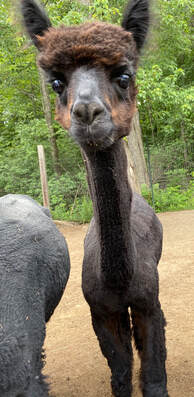
Mikky
Addy's second cria, is Mikky. She is the daughter of Zues. She is a beautiful dark rose gray! Mikky loves to be independent and do her own thing! |
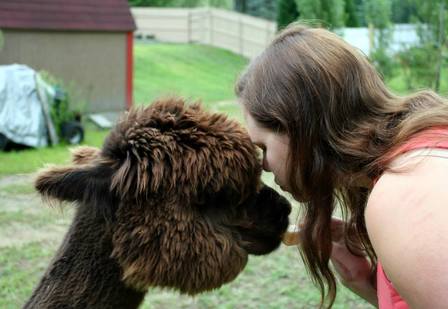
Smokey is one of our beloved alpacas. He has been on the farm from the start. He is a gelded male who is as sweet as can be. Smokey definitely loves his treats and any love he can get!
|
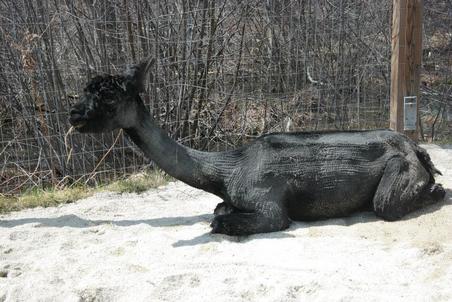
Hillary is the oldest mama here on the farm. She is a beautiful true black girl who loves to give kisses. She has been the proud mother of multiple crias but is now in "retirement". |
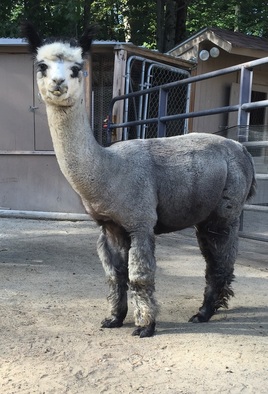
Sweet Maple Zeus is the newest addition to our farm. He is a beautifulmedium silver gray boy. He is a very sweet boy who loves to lay out and catch some rays.
|
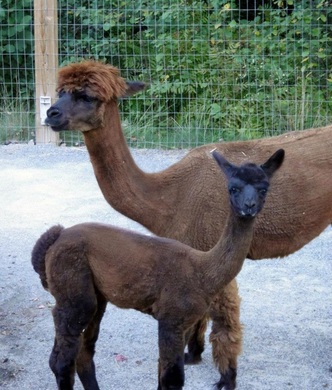
Jeorgia Sunshine One of our very proud mama's is Jeorgia Sunshine. She has given us many beautiful cria's but is now officially in retirement. She now enjoys laying in the shade and rolling in the dirt! |
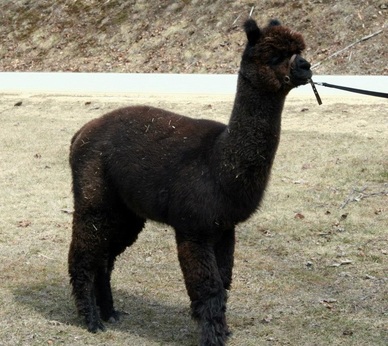
Geppetto
Our first stud, Geppetto. He is a son of King Soleman and has had one beautiful cria! He loves to have some apples as a treat and to be sprayed with the hose in the summer time! |
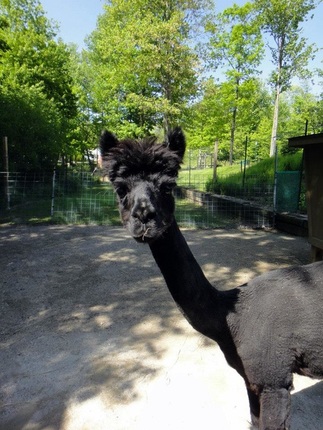
Addy is a first time mama to little Willow. She is a beautiful bay black and is very curious. Addy loves to play with her daughter Willow as well as check out what "mom and dad" are up to!
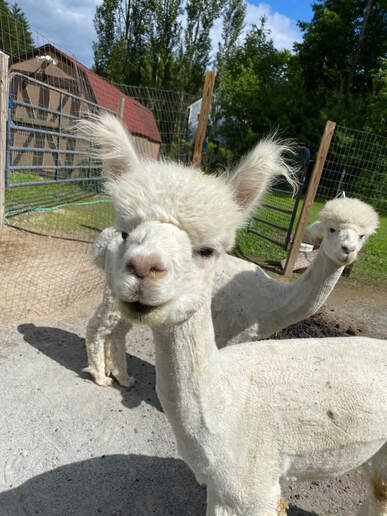
Bailey and Kodiak
Meet our newest members of the farm! They just turned about a year old and will be traveling with us to shows! They love to run and neck wrestle together!
Meet our newest members of the farm! They just turned about a year old and will be traveling with us to shows! They love to run and neck wrestle together!
ALPACA FACTS
|
Owning Alpaca Facts
|
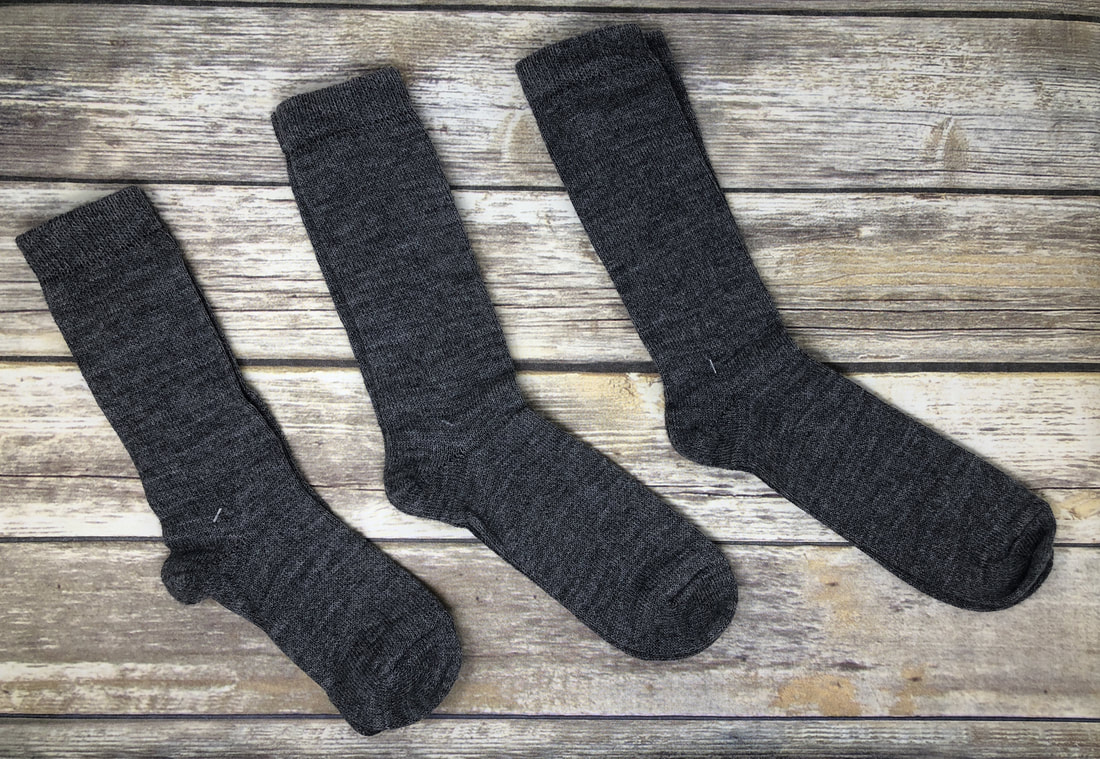
Alpaca Fiber/Product Facts
|